
माननीय ही कर रहे हैं विधायक निधि में भ्रष्टाचार
In a months-long undercover investigation, Avadhesh Akodia exposed alleged corruption in the utilisation of Rajasthan's MLA Local Area Development (MLALAD) funds, uncovering how elected representatives and government officials allegedly sought commissions in exchange for recommending and approving public projects. Conducted over eight months, the investigation employed undercover reporting after conventional documentary evidence proved insufficient to establish the alleged malpractice. Posing as the proprietor of a fictitious firm seeking contracts to supply khadi carpets to schools under the MLALAD scheme, Avadhesh approached legislators across political parties to examine whether demands for commissions were systemic rather than politically selective. The investigation documented instances in which legislators from different political parties, as well as an independent MLA, allegedly agreed to facilitate projects in return for commissions. It also uncovered allegations that government officials demanded additional payments to process and clear files. Executing the investigation required sustained engagement and considerable personal risk. Since many legislators were familiar with local journalists, the reporter could approach only those who did not know him personally, while constantly facing the possibility of being identified by political aides, visitors, or fellow journalists. Building trust and documenting the alleged transactions took several months of persistent reporting. The exposé triggered significant political and administrative repercussions. Following publication, the Rajasthan government constituted a high-level inquiry committee under the State Chief Vigilance Commission, while the Speaker of the Rajasthan Legislative Assembly referred the matter to the Ethics Committee for further examination. The investigation also led to the suspension of officials allegedly involved in the irregularities. By combining undercover reporting with rigorous verification, the investigation highlighted systemic vulnerabilities in the utilisation of public funds and reinforced journalism's critical role in ensuring transparency and accountability in democratic institutions. For its courage, persistence, and meticulous documentation of alleged corruption in the utilisation of public funds, the jury accorded this investigation a Special Mention at the Danish Siddiqui Journalism Awards.
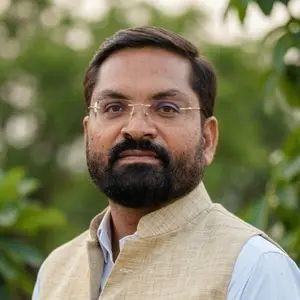
Read the Story →Avadhesh Akodia is an investigative journalist based in Rajasthan, known for his rigorous, data-driven reporting and commitment to public interest journalism. Over the years, he has built a reputation for uncovering systemic corruption, exposing policy failures, and bringing to light issues that directly affect citizens and democratic institutions.
Specialising in investigative and grassroots reporting, Avadhesh's work has consistently examined questions of governance, transparency, and accountability. His investigations have prompted administrative action and public debate, including his widely recognised reportage on the misuse of MLA funds.
He also holds the distinction of leading one of the country's first cross-border journalistic investigations spanning India and Bangladesh, which exposed a large-scale organ trafficking network.
Currently serving as a Special Correspondent with Dainik Bhaskar, Avadhesh has previously worked with several prominent media organisations, including Rajasthan Patrika, The Wire, and Tehelka. Across platforms and formats, his journalism has remained anchored in meticulous reporting, documentary evidence, and a steadfast pursuit of truth.
Through his work, Avadhesh continues to strengthen the tradition of investigative journalism by holding power to account and amplifying issues of significant public concern.
Recognising journalism that reflects integrity, courage, empathy and truth.