
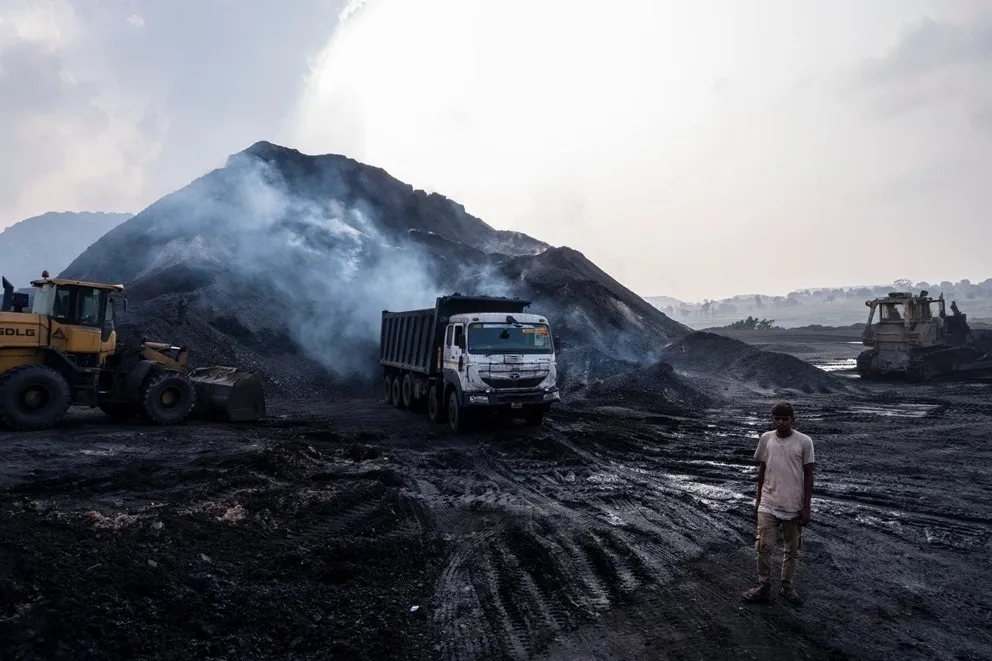
This visual story is an exploration of the fringes of the mines, where livelihoods are intricately tied not to the act of extraction itself but to the sprawling ecosystem it creates. The landscapes of Jadugora, Jharia, and Chatra district tell a tale of contrasts — of communities striving to sustain themselves in the shadow of an industry that both sustains and burdens them. Here, the mines dominate the horizon, yet their impact stretches far beyond the pits, shaping lives in ways that are both visible and invisible.
This work is rooted in countless meaningful interactions with individuals whose lived experiences bring this narrative to life. From the tea vendor who sets up his stall before dawn to serve miners, to families salvaging coal remnants at the edge of mining sites, to small business owners who rely on the ebb and flow of mining operations for survival — each story offers a unique glimpse into the ways in which these communities adapt to their circumstances.
Through these interactions, the project seeks to uncover the nuanced dependencies that define these communities. It examines how informal economies thrive on the periphery of the mining industry, how families navigate shifting dynamics in the face of environmental degradation, and how the mines shape not just livelihoods but identities and aspirations.
At its core, this project is a testament to the resilience of people living in the shadow of extraction — a call to listen to the voices of those whose lives are shaped by forces beyond their control, and to see the human side of an industry often reduced to numbers and headlines.
ApproachMy time spent within the communities living on the fringes of the mines provided a deeper understanding of the complex socio-economic fabric that binds them to the mining industry. These interactions highlighted the intricate ways in which informal economies thrive around mining operations, creating livelihoods that, while unregulated, are vital for survival.
This project employs a combination of participant observation and narrative documentation to explore how formal and informal systems intersect within these spaces. By immersing myself in the day-to-day lives of individuals in Jadugora, Jharia, and Chatra, I sought to capture the lived experiences that define their realities.
The approach also involved documenting the environmental and health repercussions of mining activity, which shape not only economic practices but also social and familial structures. This visual story emphasizes the importance of amplifying the voices of these communities, recognizing the resilience and ingenuity they demonstrate in the face of adversity.
Stories from Jadugora
Uranium mining and its invisible toll on indigenous communities
Jadugora, a small town nestled in Jharkhand, stands at the intersection of beauty and burden. Known as the site of India's first uranium mine, its picturesque forests and villages mask the invisible dangers that have plagued the community for decades. The land, once fertile and nurturing, now carries the weight of radiation and industrial scars, shaping the lives of its people in profound ways.
In the heart of Jadugora, stories unfold that reflect the resilience and struggles of its residents. Families here live in the shadow of uranium tailing ponds — vast, toxic wastelands of radioactive slurry. Locals speak of strange illnesses, unexplained deformities, and a growing list of health concerns. Villagers recount how children born with abnormalities and adults suffering from respiratory and digestive ailments have become an unsettling norm.
One of the most haunting tales comes from Sanjay Gope, a young man from Bango village, who once ran freely through the fields as a child. Over the years, his body betrayed him, weakened by seizures that left him immobile. His family lives in quiet despair, connecting his condition to the uranium mining operations that surround them.
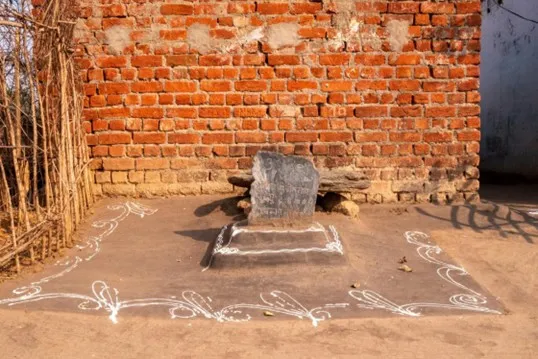
A small grave of a baby rests quietly outside a house, surrounded by intricate tribal Rangoli designs. The vibrant patterns, created with care, reflect the deep cultural reverence and grief of the family, blending sorrow with tradition in a poignant tribute. Jadugora, Jharkhand India © Ishan Banerjee
As awareness grew, they connected these occurrences to the radiation and toxic runoff from the tailing ponds. What was once folklore is now understood as a grim reality shaped by industrial activity. The narrative of Jadugora is one of adaptation, resistance, and survival as told by its people.
The villages closest to the tailing ponds are the most severely impacted. The tailings' dust drifts through these towns throughout the dry season. Radioactive waste leaks into local creeks and rivers during the monsoon season, exposing communities to more internal radiation when they bathe and drink the tainted water and fish in the nearby ponds.
The health concerns associated with uranium mining disproportionately impact indigenous people in and near the uranium mining operations region, with up to 50,000 persons at risk, according to the court.
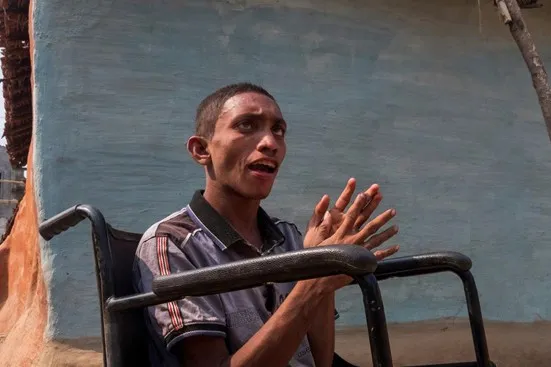
Gope, once an active child, now struggles with weakened limbs and limited mobility due to recurring seizures. Jadugora, Jharkhand © Ishan Banerjee
Sanjay Gope, a young man of approximately 21-22 years, lives a life profoundly altered by circumstances beyond his control. As a child, Sanjay was able to run, play, and move freely like any other child in the village. However, over time, his arms and legs began to weaken, and he lost much of his mobility due to recurring seizures.
Despite these widespread grievances, Uranium Corporation of India Ltd. (UCIL), the state-run entity responsible for uranium mining in the area, maintains its stance that the operations are safe. This official narrative, however, is sharply at odds with the lived experiences of families like Sanjay's and the broader community.
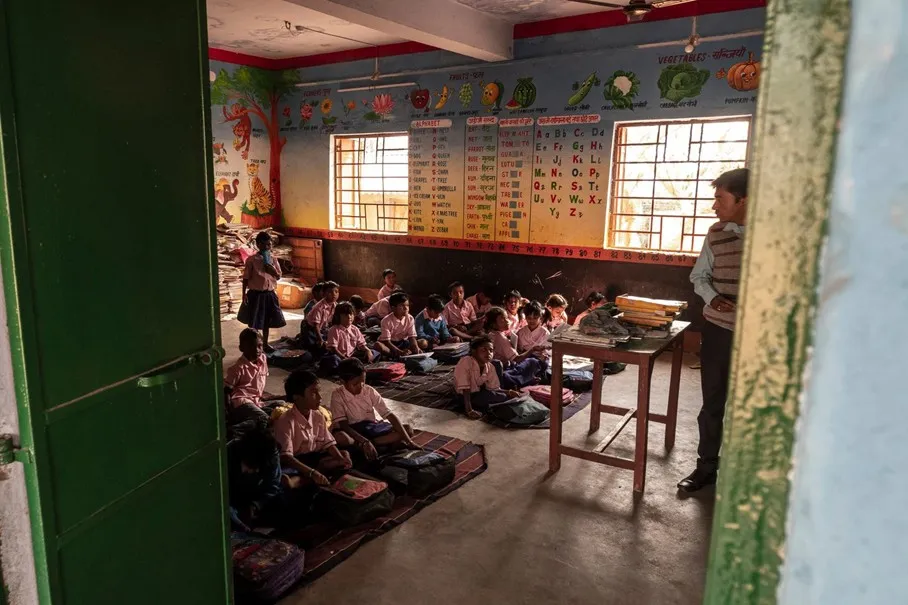
Inside a primary school classroom, young children sit on the ground. Despite the hardships their community encounters, moments of creativity and learning emerge through their daily lives. Near Bango Village in Jadugora, Jharkhand, India © Ishan Banerjee
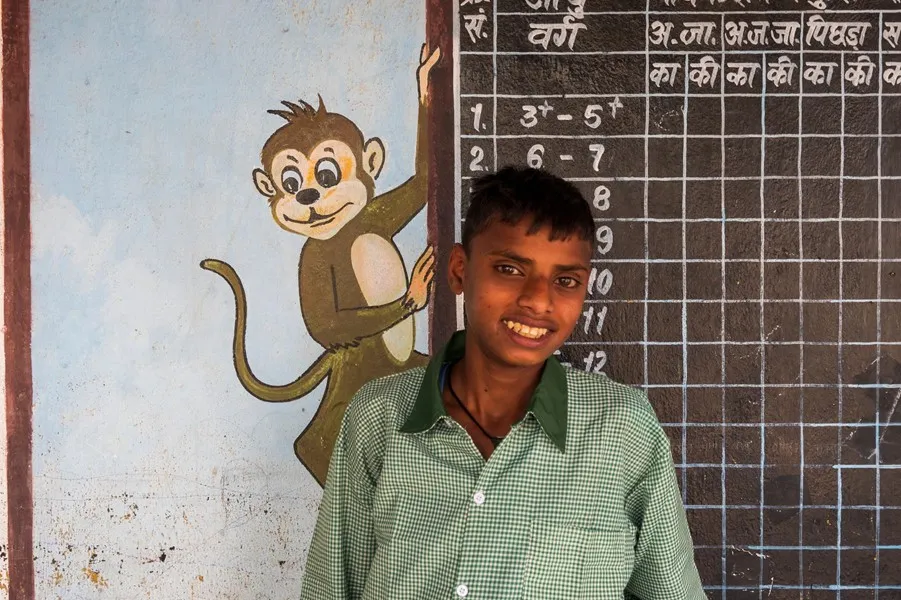
A 10-year-old boy with mental abnormalities stands in the school corridor, a quiet reminder of the hidden struggles faced by children in regions affected by uranium mining and its potential health repercussions. Near Bango Village, Jadugora, Jharkhand, India © Ishan Banerjee
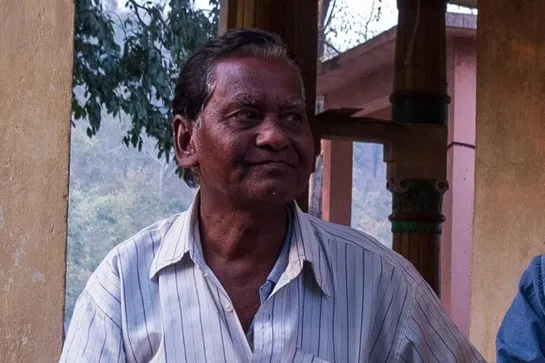
Chaatua Das, a tempo driver and part-time guide, shares his community's struggles with radiation through the eyes of visitors, raising awareness about the silent crisis in his homeland. Bhatin, Jharkhand India © Ishan Banerjee
Chaatua Das is an active member of the Jharkhandi Organisation Against Radiation (JOAR), a grassroots organisation dedicated to increasing awareness about radiation's catastrophic effects and advocating for vital legislative changes. Chaatua's advocacy stems from their community's common challenges as well as the great loss they have experienced.
Their daughter, born with disabilities on 4th September 2012, tragically passed away, a loss that Chaatua links to the harmful effects of radiation exposure from uranium mining in the region.
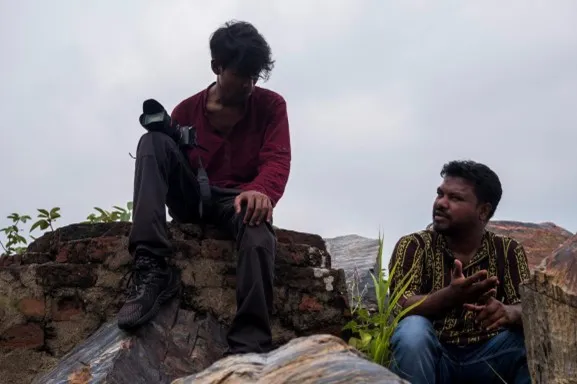
Ashish Birulee (on right) talking to Ranveer Bhagat (on left) an independent filmmaker from Jharkhand. © Ishan Banerjee
Ashish Birulee is an Adivasi environmentalist, independent photojournalist, and writer from the Ho community of Jadugoda in Jharkhand, India. In 2016, he co-founded Adivasi Lives Matter (ALM), an organization dedicated to conducting training programs for Adivasi youth. He is a core member of JOAR, which received the prestigious Nuclear Free Future Award in 2004.
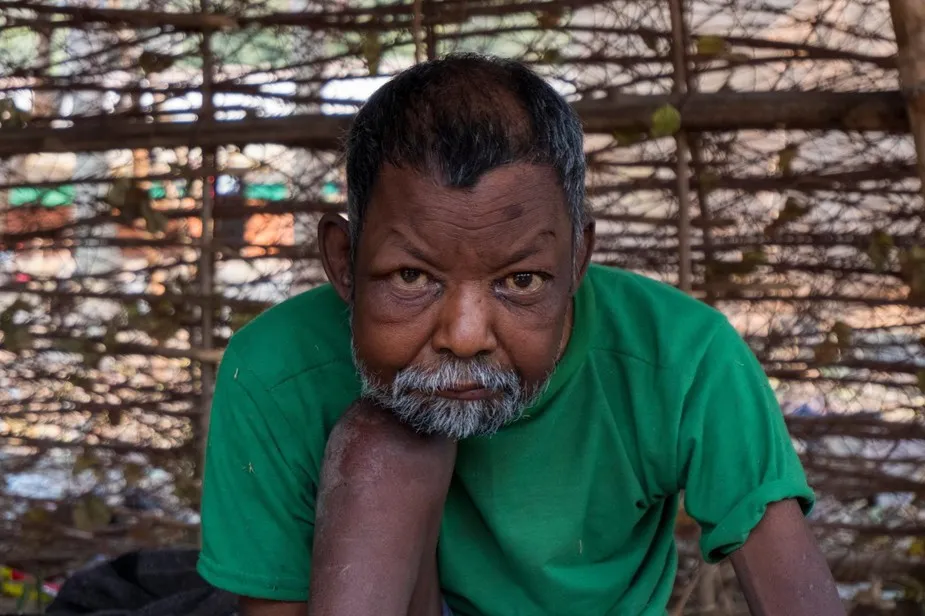
An elderly man, burdened by mental illness and skeletal deformities, lives on the margins of his own home. Discarded by his family, he now finds shelter besides the cattle hut, surviving without proper care. Jadugora, Jharkhand India © Ishan Banerjee
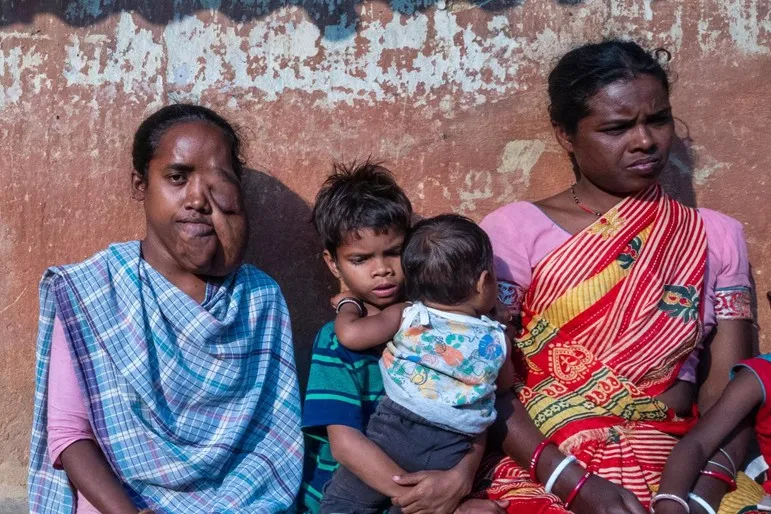
Anamika Oraon (on left, the girl in a pink suit, draped in a blue gamcha) sits with her family members. Narwa Pahar Jadugora, Jharkhand, India © Ishan Banerjee
Anamika Oraon, a young girl from a near Narwa Pahar village, carries a visible reminder of the hidden toll of uranium mining. Her quiet resilience highlights the human cost of industrial progress and serves as a poignant call for accountability and awareness.
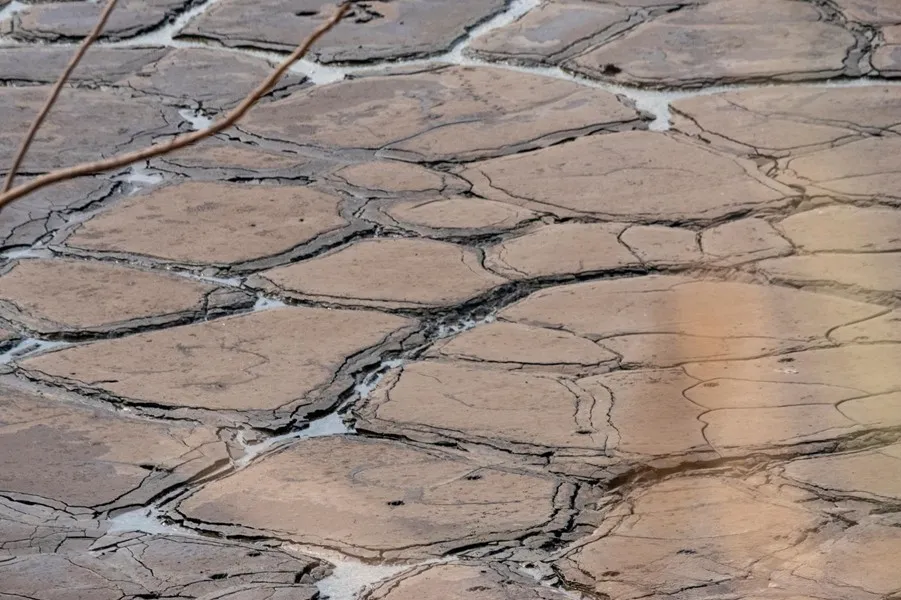
Close-up of the leftover tailings, in the form of a sand-textured slurry, contain low-levels of long-lasting radiation at about 85% of the radioactivity from the original ore. Turamdih tailing pond, Jharkhand India © Ishan Banerjee
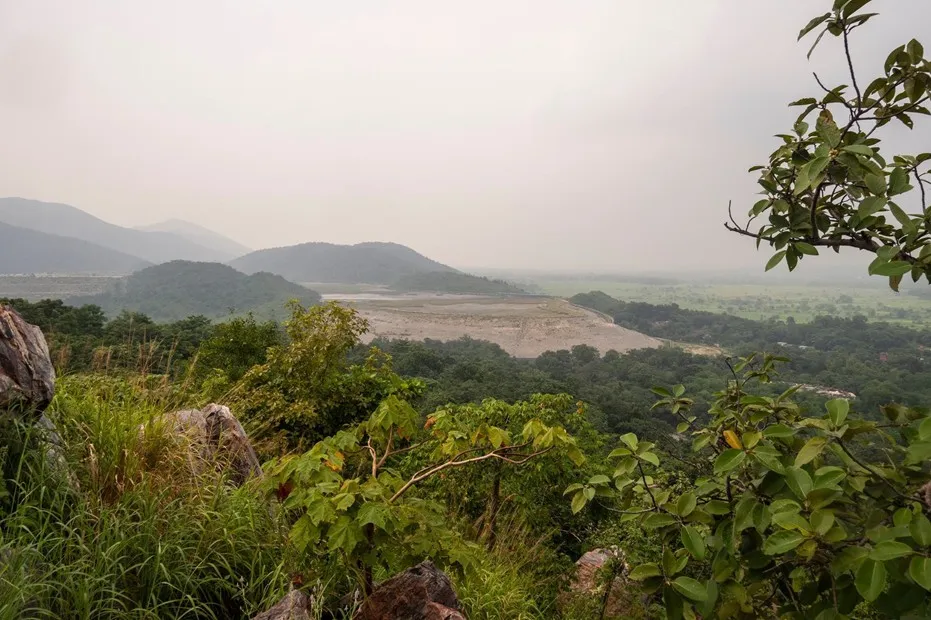
A tailing pond developed by UCIL, contains sand-textured slurry with low-levels of long-lasting radiation at about 85% of the radioactivity from the original ore. Jadugora tailing pond, Jharkhand India © Ishan Banerjee
Stories from Dhanbad
A century of underground fires in India's coal capital
In the heart of India's coal capital, Dhanbad, lies the Jharia coalfields, home to the country's oldest mines and its only reserves of prime coking coal. While these mines fuel the steel industry, they have brought over a century of underground fires and environmental devastation, transforming life in this densely populated region.
Villages like Baesbarah, located near the coalfields, are plagued by fires smoldering just beneath the ground.
The intense heat has damaged homes, with walls crumbling and even parts of the local mosque sinking into the unstable earth. Despite efforts by Bharat Coking Coal Limited (BCCL) to control the fires and resettle affected families, the situation remains dire.
Beyond the fires, the health impacts are devastating. Airborne coal dust and toxic gases cause chronic respiratory diseases, such as asthma and pneumoconiosis (Black Lung Disease), with life expectancy in the region reduced by at least a decade.
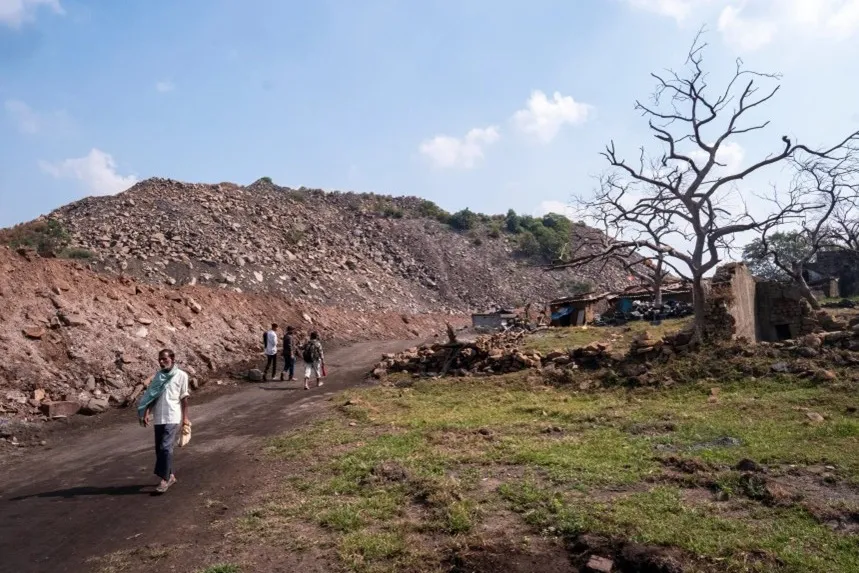
Near Bokka Pahar, Way to Rajwa Basti, Dhanbad, Jharkhand. © Ishan Banerjee
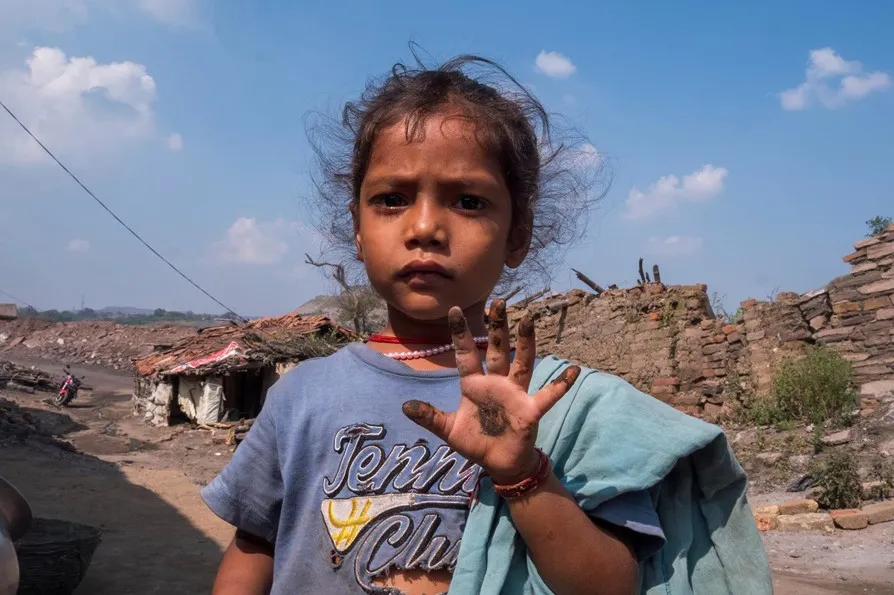
A young girl displays her henna-adorned hands. Rajwa Basti, Jharia, Jharkhand © Ishan Banerjee
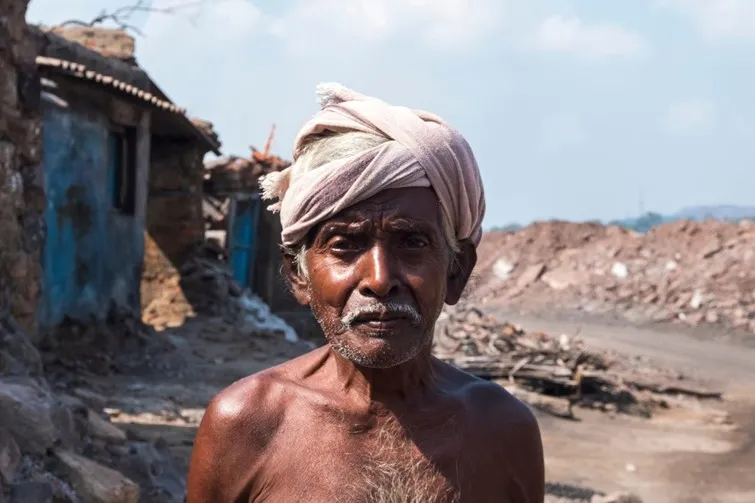
Tara Podo, an elderly resident of Rajwa Basti, Dhanbad Jharkhand. © Ishan Banerjee
Tara vividly remembers the arrival of underground fires, the heat seeping through the ground, cracks forming in homes, and the land becoming unrecognizable.
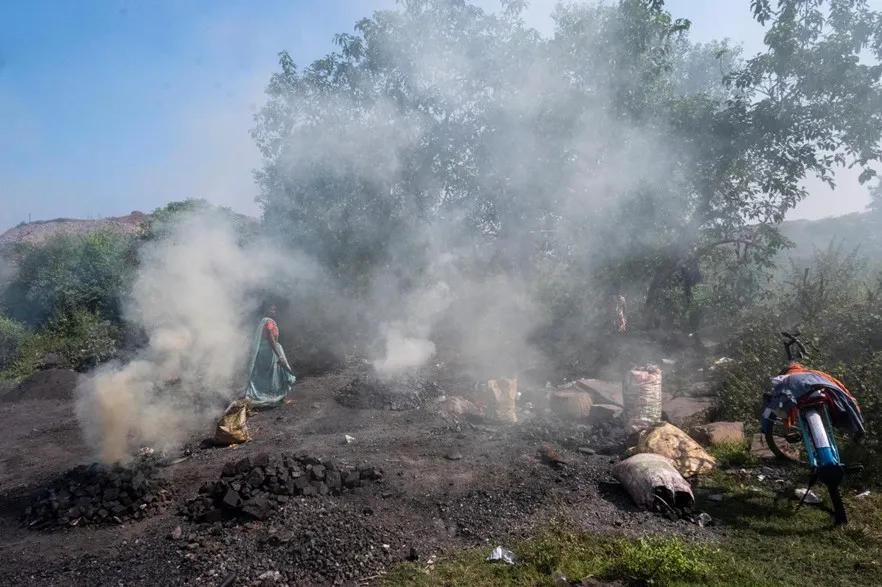
A displaced family now survives by breaking down huge coal chunks and burning them for market sale. Once store owners, their lives were upended by mass relocation. Despite their refusal to be photographed, they spoke to us with kindness. Near Bokka pahar, Dhanbad, Jharkhand © Ishan Banerjee
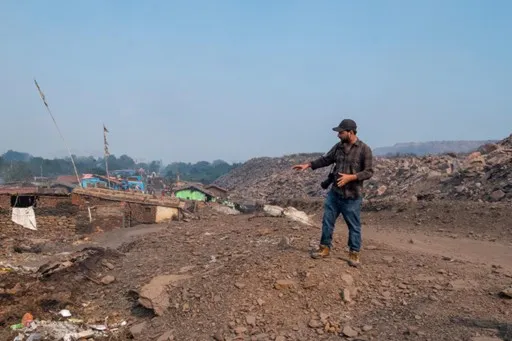
Vishal Kumar Singh at Coalfield, explaining the ground conditions. Jharia, Jharkhand © Ishan Banerjee
Vishal Kumar Singh is a social documentary photographer with five years of experience capturing life around India's coalfields. His ongoing project The Burning City — a photo book on Jharia — turns his lens toward India's largest and most infamous coalfield, where underground fires have burned for over a century.
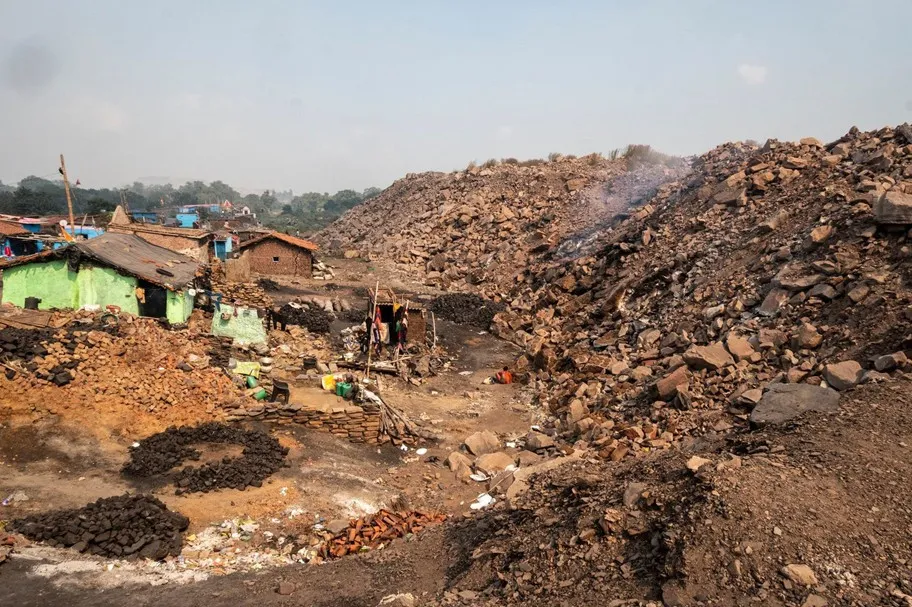
This village on the brink — huge piles of rock chunks are heaped in a desperate attempt to smother the underground fire, but the burning coal continues its slow, relentless advance, inching closer to swallowing homes and lives. Jharia, Dhanbad Jharkhand © Ishan Banerjee
Stories from Khalari
Coal dumps, cockfights, and survival near Mccluskieganj
Khalari, located near Jharkhand's "Mini London, Mccluskieganj," is a small town where daily life revolves around the Dakra and KDH coal mines. The mining industry is central to the community, with many residents spending their days collecting coal from the dumps to sell in local markets for a modest income. But amidst the toil, the weekends bring a splash of excitement and a chance for fortune.
The local weekend markets transform into arenas for the age-old tradition of cockfighting. This is not just a game but a passionate form of entertainment, a rare opportunity for the locals to unwind and test their luck. Small and large bets are placed on the cocks, making these matches the highlight of the week for many in the community.
Raising fighting cocks is an art in itself. These prized birds, often treated with great care and fed special diets, can fetch staggering prices — ranging from ₹20,000 to ₹80,000, depending on their size and the number of victories they've secured.
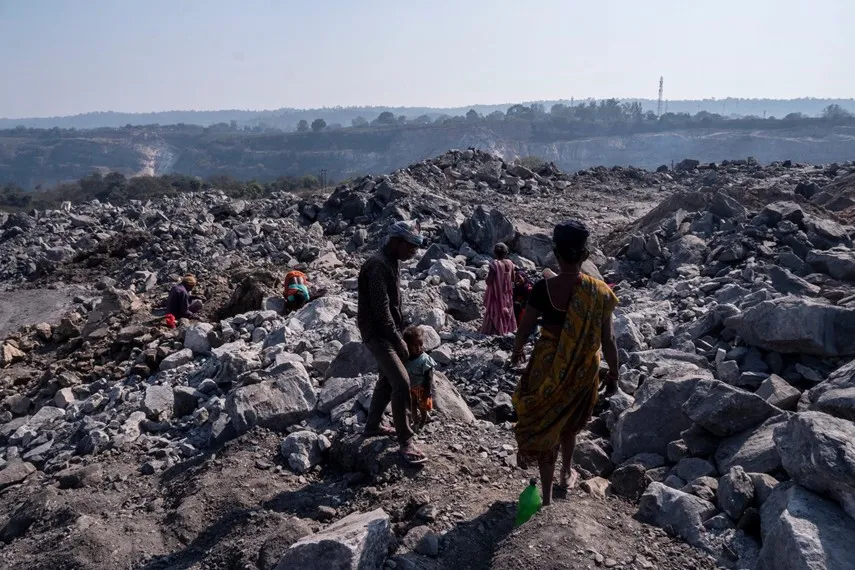
A family of eight, including five women, two men, and a child, works together gathering coal from the stone dumps. Outskirts of KDH Mine, Khalari Jharkhand © Ishan Banerjee
Each day in Khalari starts long before the first light of dawn breaks over the rugged terrain. The air is crisp but heavy with the faint scent of coal dust that lingers from the previous day's activity. Families stir from their modest homes, some constructed from mud and brick, others patched together with tarpaulin and tin sheets.
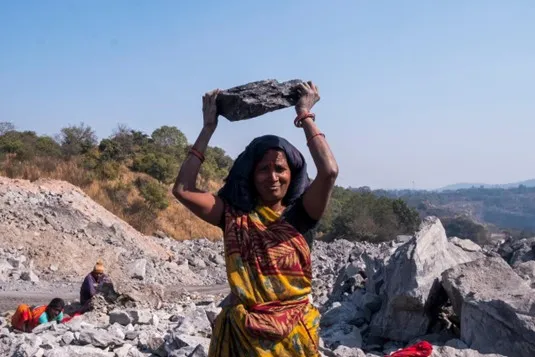
Ayo carries heavy coal chunks on her head, walking steadily over the uneven ground. Outskirts of KDH Mine, Khalari Jharkhand © Ishan Banerjee
At the center of it is Ayo, the matriarch, whose weathered face and strong presence reflect the challenges she carries. Her name, meaning "mother" in local language, symbolizes her role as the backbone of the family, holding them together through it all.
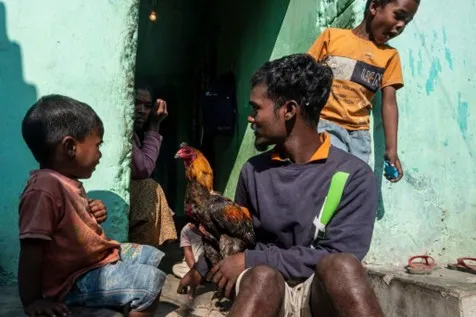
In the warmth of their small courtyard, a man sits with his fighting cock resting on his lap, surrounded by his younger brother and nephews. Khalari, Jharkhand © Ishan Banerjee
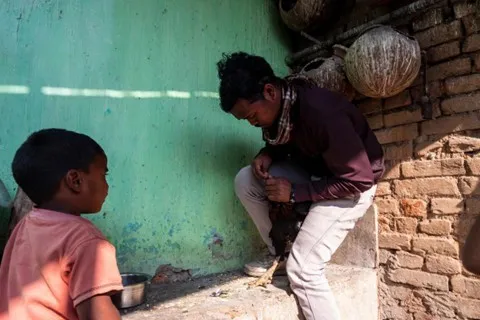
Vicky, a local vendor at his home, feeds his cock a performance-boosting medicine in preparation for murgi ladhais (cockfights). Khalari, Jharkhand © Ishan Banerjee
The villages around Khalari come alive every Saturday and Sunday with murgi ladhais or cockfights, a popular yet controversial tradition. Villagers from neighboring districts gather in large numbers to place bets. The matches are held just five kilometers from the local police station, yet authorities remain silent.
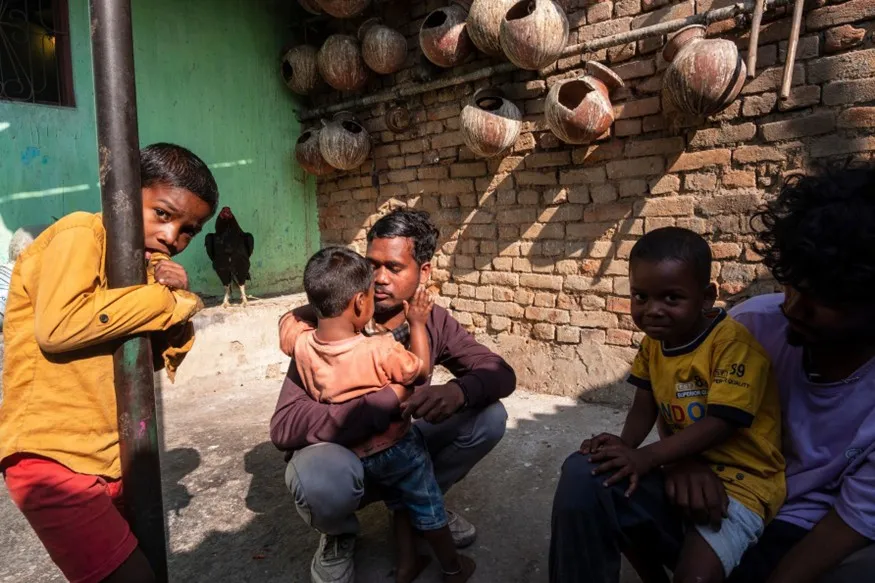
Vicky and his younger brother spend time playing with their nephews in their small courtyard, moments before their rooster enters the murgi ladhais competition. Terracotta pots, carefully hung on the walls, serve as nesting spaces for prized pigeons. Khalari, Jharkhand © Ishan Banerjee
Stories from Chatra
Open-cast coal mines and the communities they consume
The dust never truly settles in Chatra. It clings to the skin, settles into the creases of clothes, and hangs in the air like an unshakable memory. This district, tucked deep in the heart of Jharkhand, is more than just a land of forests and rivers — it is a land of coal. Beneath its soil lie seams of black gold, veins of fossilized energy that fuel industries and economies far beyond the reach of those who extract it.
Chatra is home to several mines, each a gaping wound in the earth. The Amrapali Coal Mine, an open-cast operation in Tandwa, sprawls across a vast stretch of land, its surface stripped layer by layer to unearth the coal buried beneath. Here, giant earthmovers and dumpers roll over once-fertile fields, their wheels carving deep scars into the soil.
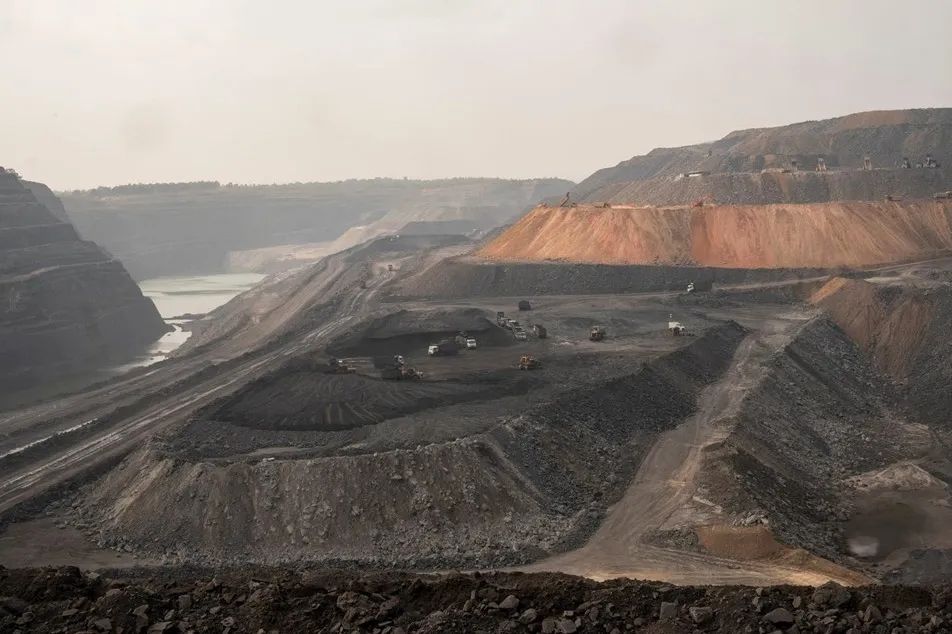
Magadh Mines, Chatra Jharkhand. © Ishan Banerjee
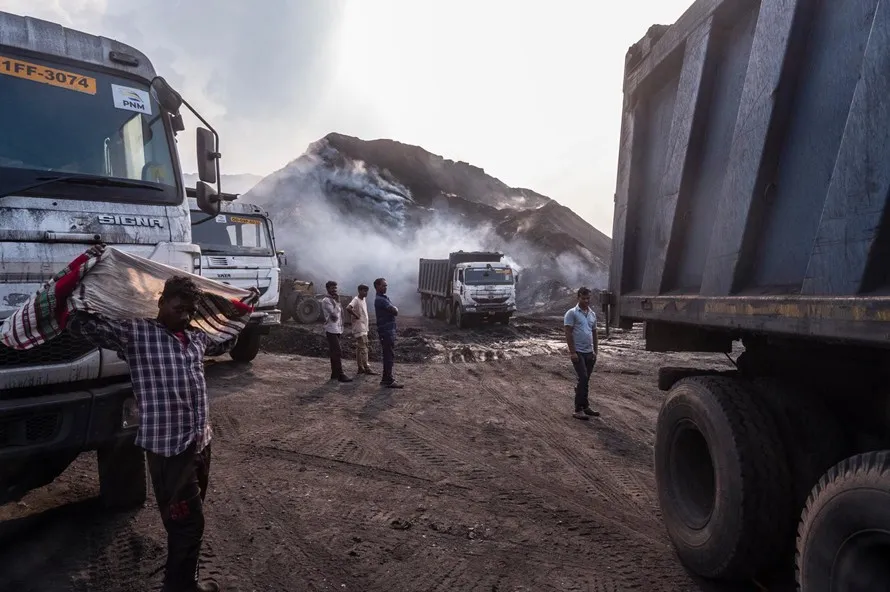
In the depths of an abandoned mine, truck drivers wait patiently for their vehicles to be loaded with coal. The smoldering embers, hidden beneath the black dust, threaten both their cargo and their journey ahead. Chatra, Jharkhand © Ishan Banerjee
The Magadh Coal Mine hums with the relentless activity of Central Coalfields Limited (CCL). Dust rises in thick clouds, turning the horizon into a hazy blur. Even the rivers, once lifelines for villages, now run black in places where coal dust settles into their beds.
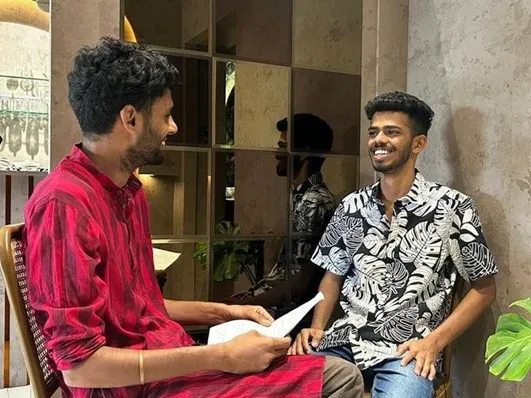
Nilesh Kumar (on the right), a Guest Faculty at Hamstech College of Creative Education, engages in a discussion with Ishan Banerjee (on the left).
Nilesh Kumar is a travel and documentary photographer based in Ranchi, Jharkhand. His work primarily focuses on the environment, indigenous communities, and the vibrant festivals of India. A turning point in his career came in 2020 when he received the Sahapedia Photography Grant.
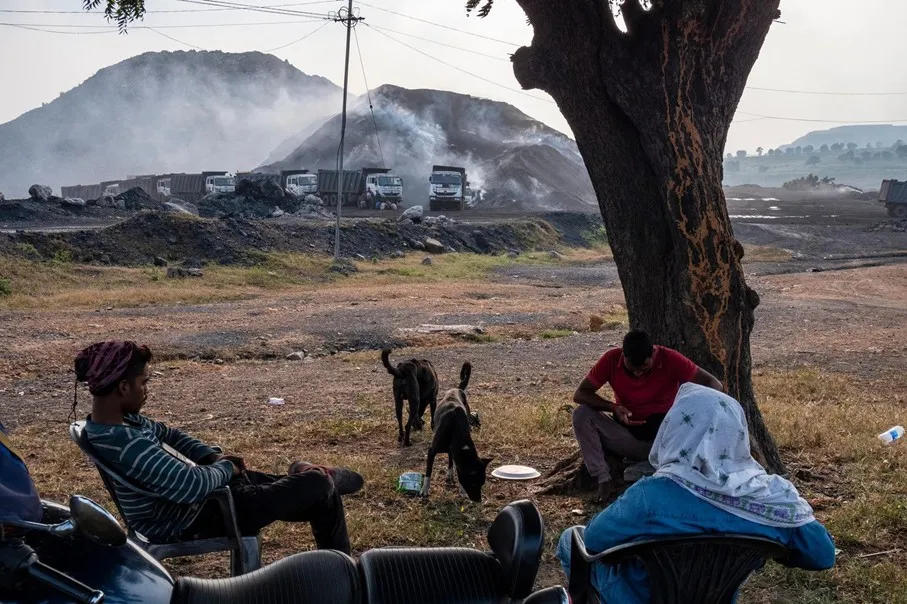
At the edge of an abandoned mine in Chatra, three men wait quietly. The leader, wearing a white scarf, oversees the loading of trucks while his workers sit beside him. Chatra Jharkhand © Ishan Banerjee
The Rathole Mines
Hidden in the forest — illegal extraction, covert survival
The thick canopy of Jharkhand's forests is often described as serene — a green expanse sheltering diverse life and deep-rooted communities. But as I ventured deeper into Jharkhand forest area, I found myself amid a starkly different reality — one that reveals the price extracted from both the land and its people.
Here, tucked away in the dense foliage and, shockingly, even along riverbanks, lay more than ten active rat-hole mines. Unlike the organized, large-scale coal operations that dot Jharkhand's mineral belt, these mines hummed with quiet, covert activity.
The mines were scattered like rabbit burrows, their small entrances blending into the forest floor. From a distance, there was little to see — no towering machinery, no conveyor belts, no billowing smoke. But up close, the marks of human activity became clear: dirt trails where miners had trudged countless times, footprints pressed into coal dust, and hastily stacked sacks filled with freshly extracted coal.
I counted more than ten such tunnels, each one no wider than a man's shoulders, disappearing into the earth. Inside, miners clawed coal out by hand, armed with little more than pickaxes and sheer will. There were no helmets, no protective gear, no emergency exits. Just darkness, dust, and an unspoken understanding that a single mistake could seal them inside forever.
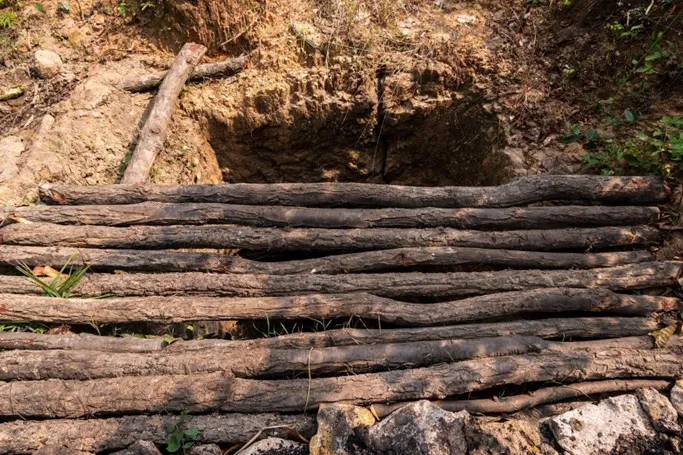
A freshly dug rat-hole mine, discreetly concealed beneath a layer of tree branches. This simple yet effective camouflage helps miners evade detection while continuing their perilous work beneath the earth. Jharkhand © Ishan Banerjee
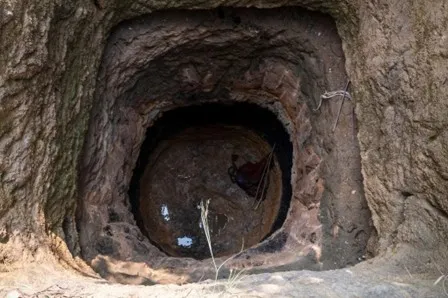
An underground tunnel, carved by rat-hole miners, was still under construction when one of them quickly disappeared inside, leaving only his headscarf at the entrance as a fleeting trace of his presence. Jharkhand © Ishan Banerjee
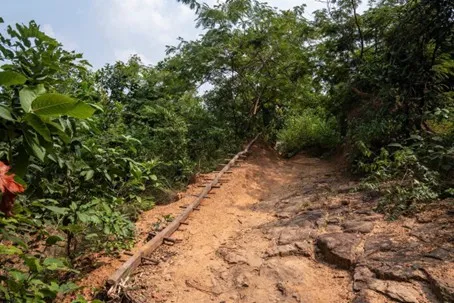
A handcrafted ladder, made from a single tree, was carefully built by miners to access the narrow underground rat-hole mines. Jharkhand © Ishan Banerjee
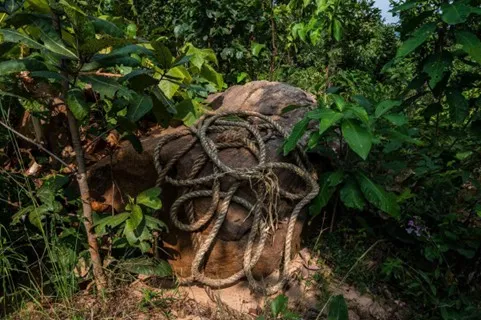
Discarded ropes form a pulley system, tied to a bamboo structure that serves as a manual lifting crane. This simple yet effective setup allows miners to haul coal from the narrow underground rat-hole mines. Jharkhand © Ishan Banerjee
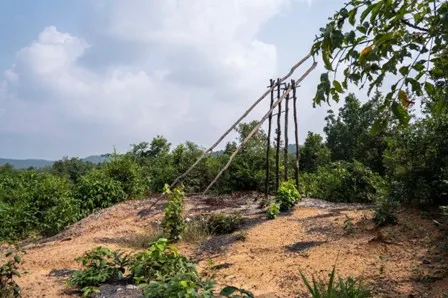
This simple weightlifting crane, crafted from bamboo and ropes, forms a pulley system essential for extracting coal from the rat-hole mines. It takes three people to operate. Jharkhand © Ishan Banerjee
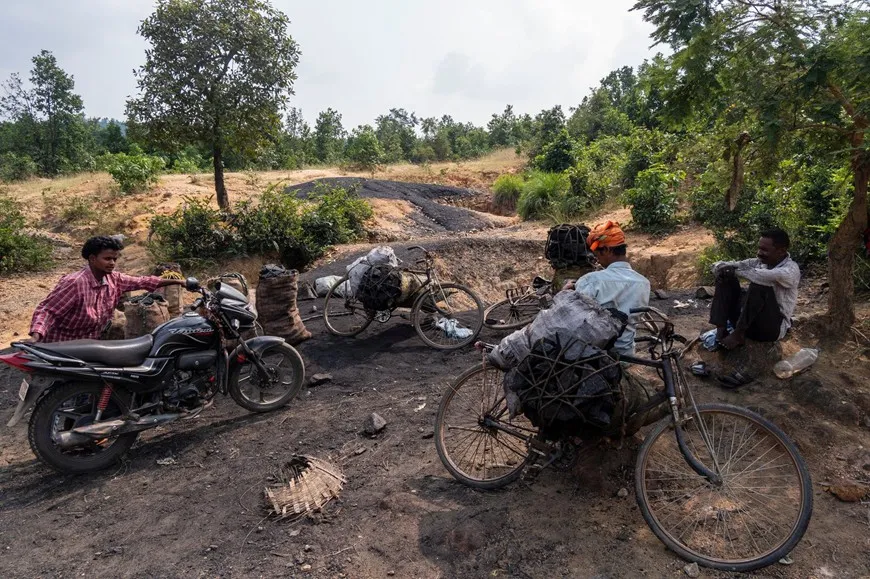
Rat-hole miners near a mine load extracted coal onto their cycles and bikes, while a man in an orange scarf secures a torch to his head, preparing to descend into the narrow, treacherous tunnel. Jharkhand © Ishan Banerjee
Independent Voices on Mining Documentation

Parul Kunkal
An aspiring documentary filmmaker from Jamshedpur, Jharkhand, with a background in Mass Communication. Passionate about non-fiction storytelling, she explores themes of migration, development, education, and gender, drawing from her tribal identity. Committed to bridging the narrative gap, she works with media and grassroots organizations to amplify underrepresented voices and indigenous experiences.
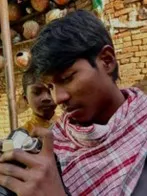
Ranveer Bhagat
A Ranchi-based cinematographer and documentary filmmaker with a degree in Filmmaking from Dr. Shyama Prasad Mukherjee University. Passionate about storytelling, he has worked on documentaries covering tribal culture, wildlife, and mining. A Green Hub Central India Fellow, he also designs posters for films. Ranveer continues to explore visual narratives through film, photography, and design.

Arvind Lakra
A self-taught street and documentary photographer based in Jharkhand, known for his compelling visual storytelling. His work captures the everyday lives of people, focusing on socio-cultural dynamics. As the project ambassador for the 24HourProject in 2019, Arvind showcased his ability to document raw, authentic moments, using photography as a powerful tool for social change.